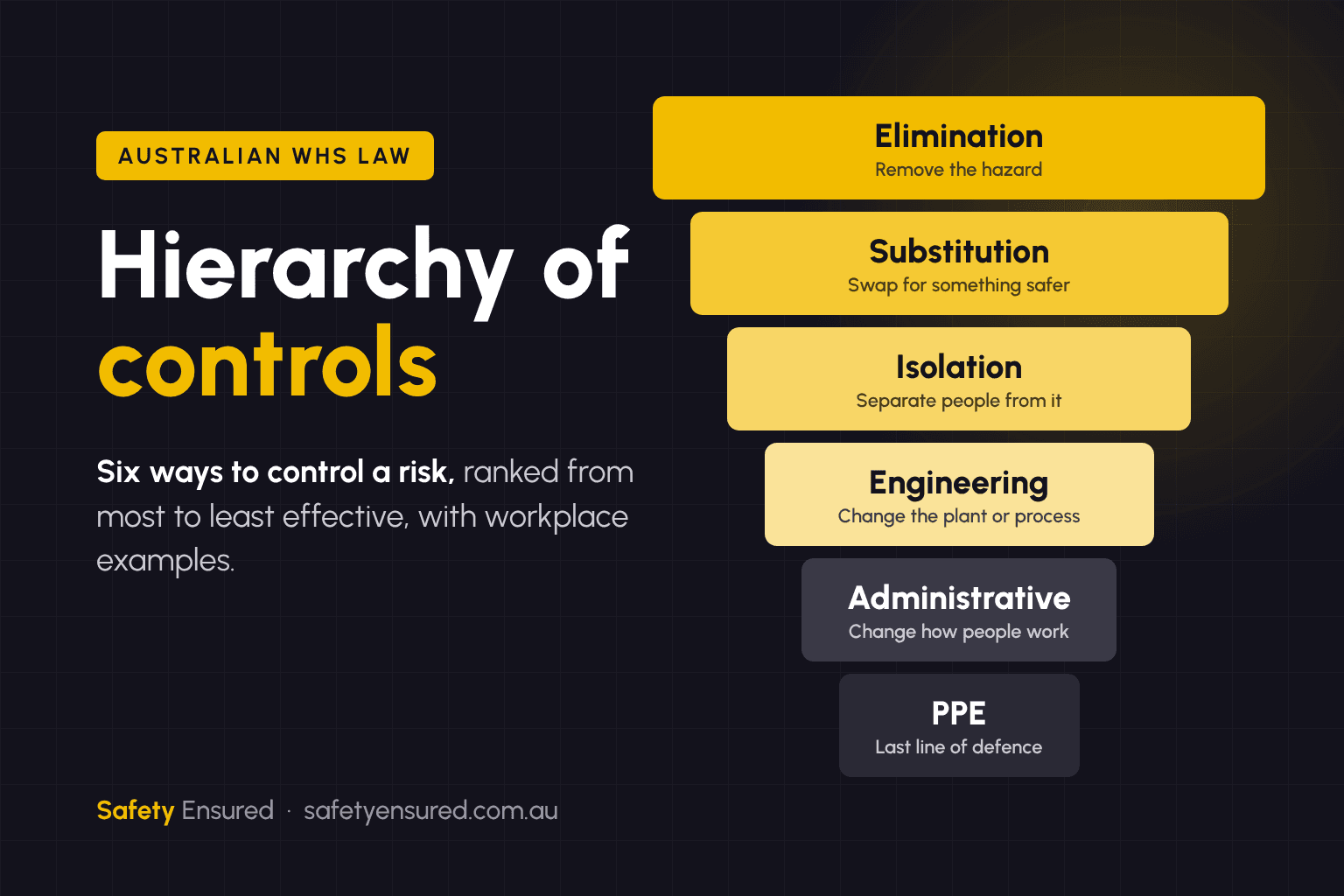
The hierarchy of controls explained, with workplace examples
The hierarchy of controls ranks the ways to manage WHS risks, from elimination to PPE. Each level explained, with examples and what Australian law requires.
READ MORE...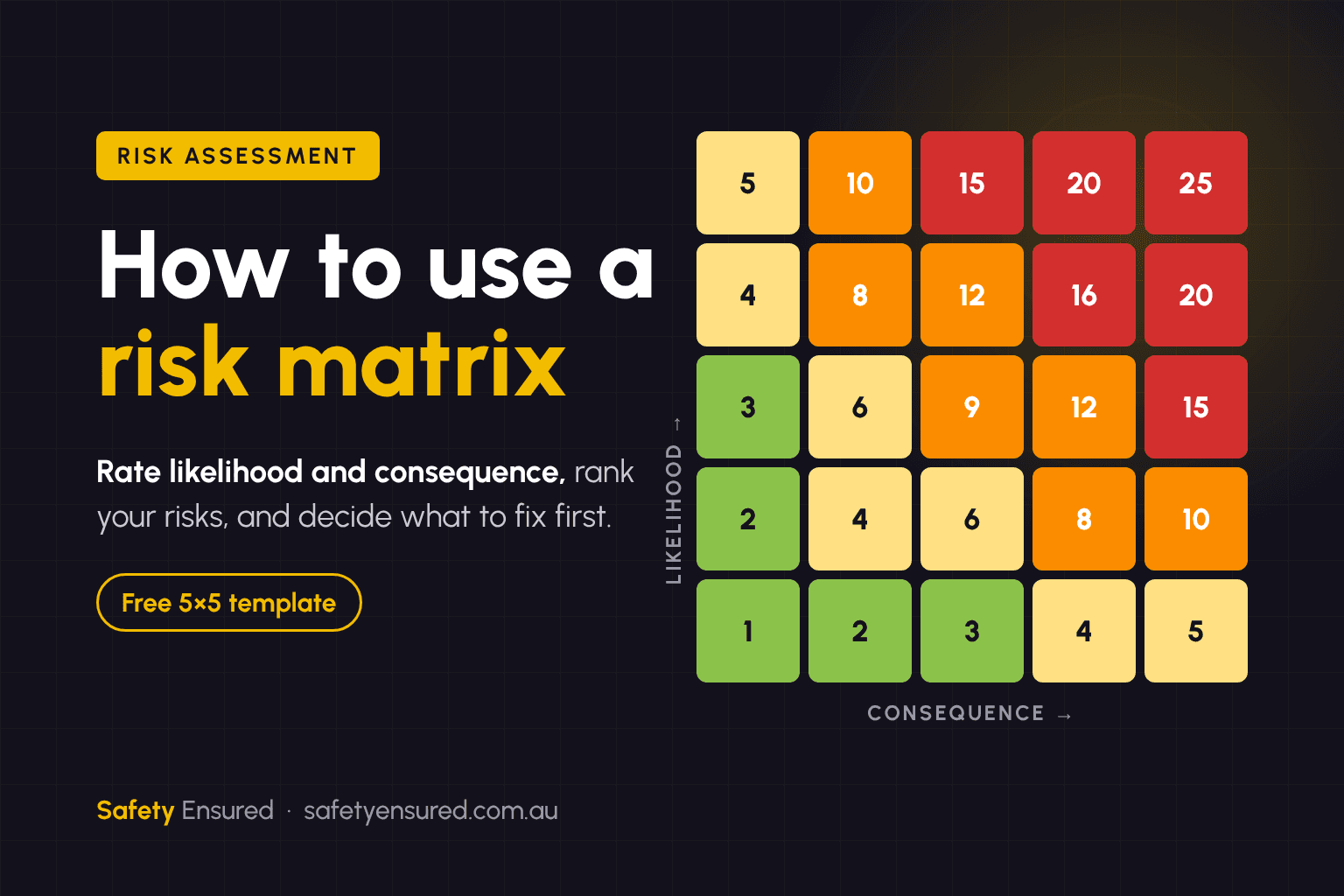
How to use a risk matrix (with a free 5×5 template)
How to use a 5×5 risk matrix to rate likelihood and consequence, prioritise WHS risks and plan controls. Includes a worked example and a free Excel template.
READ MORE...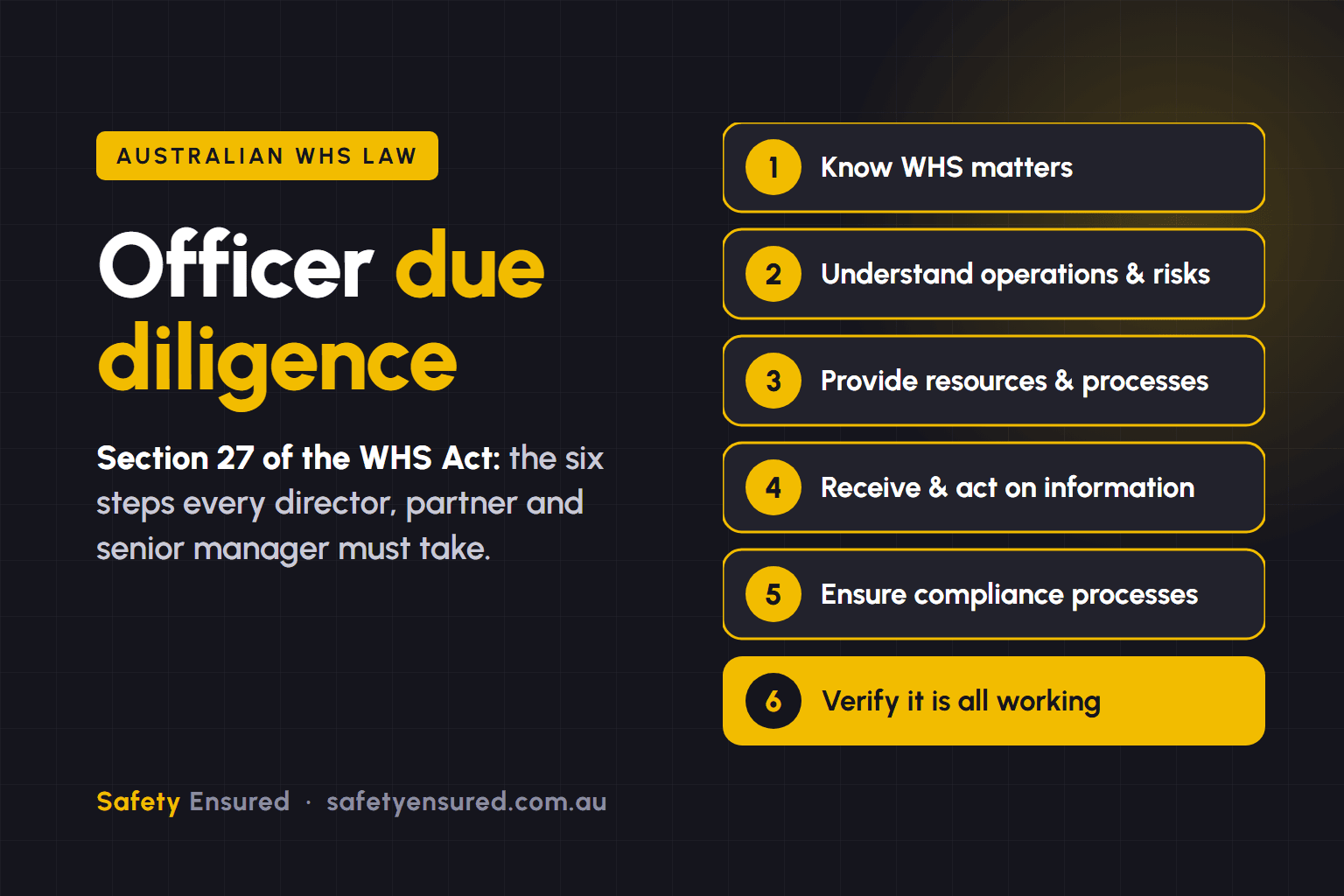
Officer due diligence under the WHS Act: the six duties explained
What WHS due diligence requires of directors, partners and senior managers: the six elements in section 27, what they look like in practice, and a checklist.
READ MORE...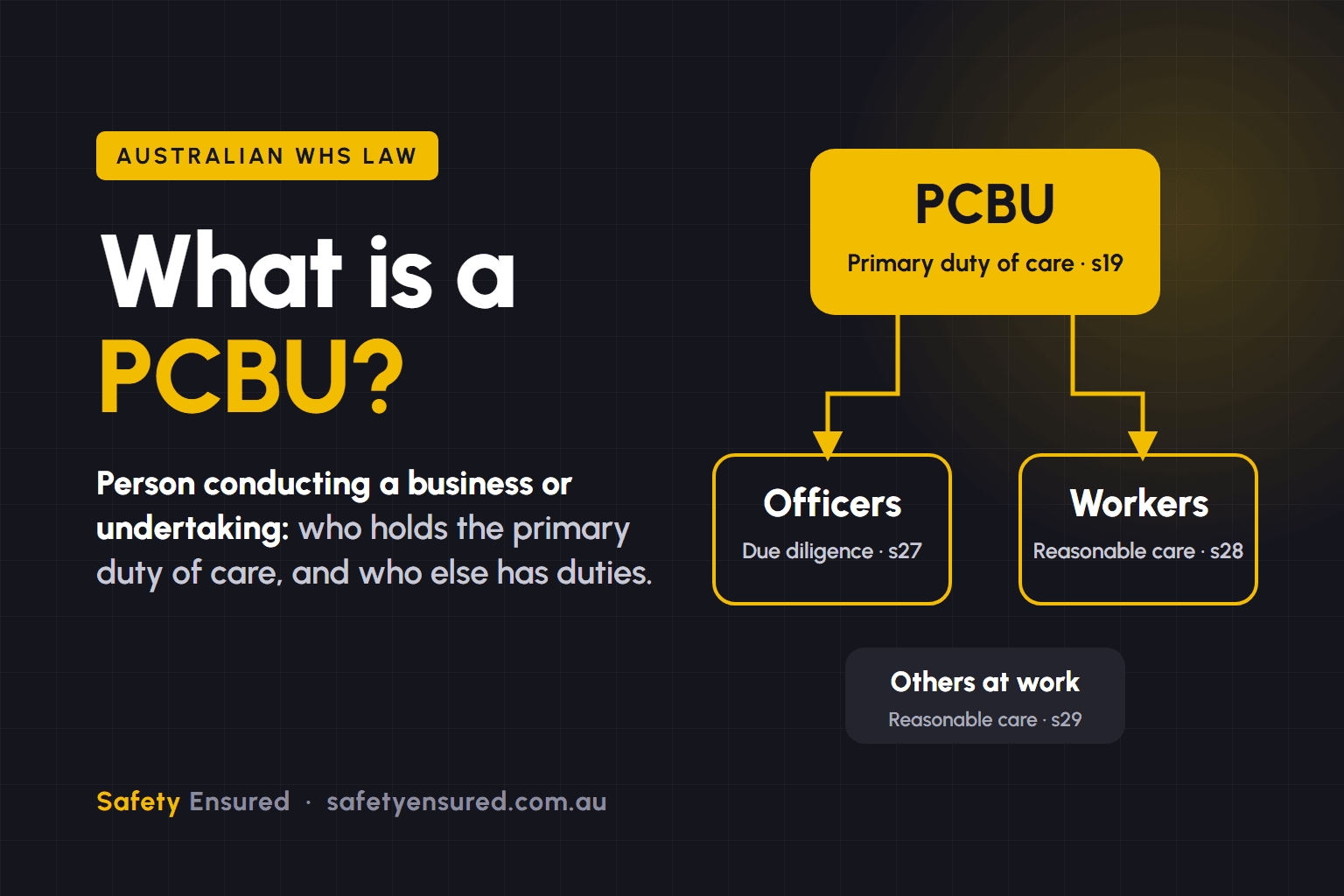
What is a PCBU? Meaning, duties and examples
PCBU means person conducting a business or undertaking. Learn who is a PCBU under Australian WHS law, what the primary duty of care requires, with examples.
READ MORE...
Translating WHS risk appetite into auditable governance actions
Turning risk appetite into explicit thresholds, escalation paths, and resource triggers for Australian WHS governance.
READ MORE...
Why ‘we’re not a company’ is not a WHS defence
Many assume WHS duties sit with companies. That fails for partnerships, sole traders and committees, exposing individuals to heavy WHS fines without realising it.
READ MORE...